Why do some of the most devout people fall prey to pride? Why does ego often wear the mask of righteousness? And how do divine truths get buried under rituals and reputation?
In today’s world, where external image often matters more than internal integrity, this ancient story from the scriptures feels more relevant than ever. Imagine a spiritual influencer refusing to acknowledge a guest who didn’t fit their idea of “divine,” or a father disowning his daughter over her choice of an unconventional, minimalist partner. We see these modern echoes everywhere—from family feuds to social media judgments, from toxic traditions to self-righteous spirituality.
This isn’t just a historical drama—it’s a reflection of our daily spiritual struggle.
The tale where Prajapati Daksh, a symbol of pride rooted in formality and rituals, crosses paths with Lord Shiva, the embodiment of detachment, stillness, and unshakable truth. What unfolds is not merely a war of words, but a cosmic confrontation between ego and surrender, control and transcendence.
🔥 This isn’t just about gods. It’s about us—our choices, our attachments, and the battles we fight between pride and presence.
From workplace disrespect to family misunderstandings, from social judgments to spiritual awakenings, this story reveals the eternal consequences of ego and the quiet power of surrender.
In the sacred halls of ancient wisdom, where time kneels at the feet of eternity, Maharishi Maitreya begins a soul-stirring tale — one that echoes across yugas, generations, and hearts clouded with pride.
As Vidura sat in deep reflection, the question arose from his lips with the weight of centuries behind it:
“Why did Prajapati Daksh, a father who deeply loved his daughters, disrespect his own child Sati? Why such venom against Mahadev, the guru of all beings, the most peaceful, detached, and compassionate soul? What enmity can one have with the Lord of Lords, Shiva himself?”
Maharishi Maitreya gently closed his eyes, and in the stillness that followed, began to unfold a divine story — not just of gods, but of ego and surrender, of misunderstanding and the eternal test of devotion.
The Seed of Conflict: Ego vs. Renunciation
Prajapati Daksh, one of the most powerful patriarchs in creation, was renowned for his discipline, austerity, and pride in Vedic traditions. His daughter, Sati, was the embodiment of purity and devotion. Though Daksh loved her dearly, fate — and perhaps divine irony — willed her marriage to that one soul Daksh never understood: Lord Shiva.
Shiva, the great ascetic, adorned with ash from funeral pyres, clothed in tiger skin, and surrounded by spirits, stood as the antithesis of everything Daksh valued. Where Daksh saw ritual, Shiva represented transcendence. Where Daksh sought order, Shiva embodied divine chaos. And yet, it was this enigmatic, serene Lord whom Sati loved with her entire being.
Daksh reluctantly gave Sati in marriage to Shiva. But he never accepted it. His ego, veiled as righteousness, nursed a grudge too deep for the heart to bear. And one day, that grudge found a stage.
The Assembly of Gods: When Daksh Challenged Divinity
A grand yagya was being held. All celestial beings — devas, rishis, and fire gods — gathered in this majestic sabha. The room shimmered with divine presence, and as Daksh entered, even the mightiest stood in reverence. All… except Brahma and Shiva.
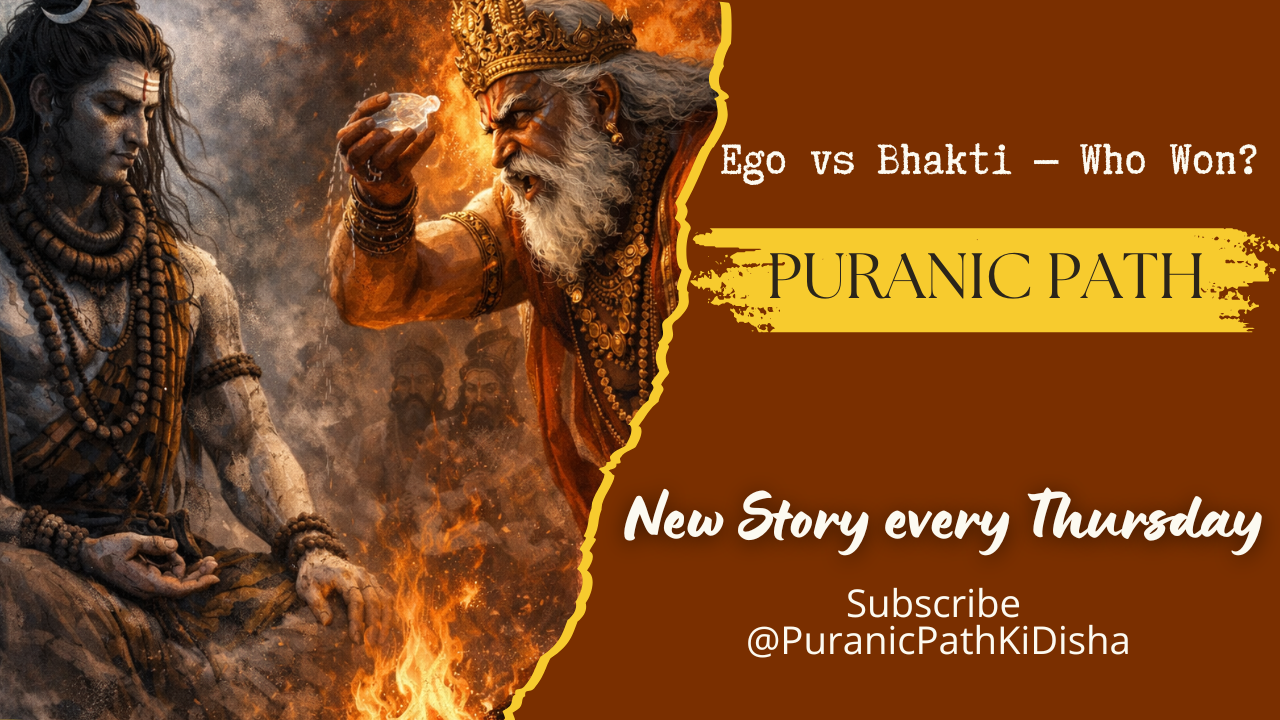
Mahadev seated calmly, not rising to greet him, his pride was pierced. Unable to tolerate what he perceived as a grave insult, Daksh’s eyes flared with fury, as though his gaze alone could burn Shiva to ashes. Offended beyond reason, he stood before the assembly of devas, fire deities, and Brahma-rishis, and in a voice thick with indignation, declared:
“O noble beings, I do not speak out of ignorance or recklessness, but with rightful decorum. This Mahadev has defiled the sacred code of conduct upheld by guardians of dharma. Look at his arrogance! He married my daughter, Sati, in the presence of holy fire and learned Brahmins, making him my son-in-law. Yet today, he has not even honoured me with a word, let alone risen to show respect.”
His voice trembling with scorn, Daksh continued,
“Though my heart resisted, fate compelled me to give my cherished daughter, Sukhmani, to this man. But what has he brought her into? A life among ghosts and spirits in desolate cremation grounds! He smears his body with the ashes of the dead, wears a garland of human skulls, and decorates himself with bones. What virtue lies in this madness? This is not a life of dharma—it is defilement! He disregards all noble customs and associates only with the intoxicated and the deranged.”
His words, filled with venom, echoed through the assembly. Yet Lord Shiva remained unmoved, still as the mountain, untouched by the whirlwind of Daksh’s pride.
But Daksh, consumed by his ego and humiliation, could bear no more. In his wrath, he lifted his hand, cupped with water, the ancient gesture of pronouncing a curse. With trembling lips and fire in his heart, he prepared to speak the words that would attempt to strip Mahadev of his rightful place among the gods.
Unaware that he was not cursing a man—but the very embodiment of stillness, truth, and transcendence.
The poison of ego dripped from his words as he cursed:
“From today, Shiva shall not receive any share of the yagna offerings alongside Indra, Upendra, and the other gods.”
The Silent Lord, The Furious Devotees
The chief sages and dignitaries of the assembly, sensing the gravity of the moment, rose to restrain Daksh. With folded hands and gentle words, they pleaded with him to reconsider—to not let anger cloud his judgment. But blinded by pride and fury, Daksh refused to hear anyone. Deaf to wisdom and decorum, he uttered the curse upon Mahadev, stripping him of his share in the sacred yagnas.
Having cast his venomous words into the sacred space, Daksh turned his back on the assembly. Still seething, he stormed out, his footsteps heavy with ego, and returned to his abode—leaving behind a hall trembling with silence, and a curse that would echo through eternity.
Lord Shiva, ever tranquil, remained unmoved. Like the calm center of a raging storm, he absorbed the insult in divine stillness.
But his followers, especially Nandi, the Nandishwar, could not tolerate this humiliation.
With fire in his voice and devotion in his heart, Nandishwar, unable to bear the insult to his beloved Lord Shankar, stood before the assembly and pronounced a powerful curse upon Daksh and those who blindly followed him:
“This foolish Daksh, intoxicated by his pride in this perishable human body, dares to bear malice against Lord Shankar—who is the very embodiment of compassion, renunciation, and eternal truth. Because of his arrogance, he will remain forever ignorant of true knowledge.”
He continued, his words charged with divine indignation:
**“Deluded by the promises of the Vedas that speak of merit through sacrifices and rituals, he has lost the power to discriminate between the eternal and the transient. Entangled in household pleasures and blinded by ego, he mistakes the body to be the self and forgets his true spiritual essence. His understanding is no better than that of a beast. Therefore, let his outer form reflect his inner ignorance—may his face become that of a goat!”
The curse did not end there. Nandishwar turned toward the Brahmins and supporters of Daksh:
“This so-called scholar considers ritualistic knowledge to be the highest truth, but in reality, he is ensnared by the fragrance of karmic rewards, just like bees caught in the sweet scent of a poisonous flower. Let him and those who side with him be bound to the endless cycle of birth and death.”
“These Brahmins, who should uphold purity and wisdom, will instead abandon discrimination—even between what is pure and impure. They will misuse sacred knowledge, penance, and vows not for liberation, but to fill their bellies. Enslaved by desires for wealth, the body, and sensual pleasures, they will roam the world begging, having lost the essence of the very dharma they claim to protect.”
In that moment, Nandishwar’s words were not merely a curse—they were a searing mirror held up to spiritual hypocrisy, exposing the dangers of ego hidden beneath the cloak of ritualism.
The Clash of Worlds: Ritual vs. Renunciation
Upon hearing Nandishwar’s fierce curse upon the Brahmin community, Sage Bhrigu, a staunch guardian of Vedic tradition, rose in righteous indignation. His eyes ablaze with anger, he retaliated with a counter-curse, his voice reverberating through the assembly:
“Those who call themselves devotees of Shiva, and their followers, shall be known for their contradictory behaviour and hypocrisy. They will wear sacred threads, yet adorn themselves with bones—symbols once pure, now hollow with pretension. They will masquerade as saints, and the world will wrongly revere them as gods.”
His words sharpened with every syllable, he continued:
“You, who mock the Vedas and insult the Brahmins—the very torchbearers of righteousness and protectors of the sacred varna system—have strayed from the eternal path of truth. The Vedic way is the sole source of human welfare, the timeless guide for spiritual evolution. Yet you, intoxicated by false renunciation, reject this sacred order.”
With piercing finality, Bhrigu declared:
**“Since you scorn the pure and eternal teachings of the Vedas, may you be cast onto the path you so proudly uphold—a path of contradiction and chaos. Go to the realm of your deity, the so-called Lord of Spirits, the chief of ghosts—for that is where your distorted faith truly belongs.”
In that cursed exchange, the rift widened—not just between individuals, but between ritual and renunciation, orthodoxy and transcendence, outer discipline and inner realization.
It was no longer just a conflict of words; it had become a spiritual divide that would echo through generations.
Lord Shiva left
After the intense exchange of curses and the storm of egos unleashed in the grand assembly, Lord Shankar, ever serene yet deeply disrespected, rose in silence and departed with his devoted followers. No words of retaliation, no fiery outburst—only a stillness that echoed louder than any argument.
Meanwhile, the Prajapatis, determined to uphold their ritual duties, proceeded with a monumental yajna, wherein Lord Shri Hari—the Supreme Lord—was the central deity of worship. This sacred offering was not a brief ceremony, but a colossal endeavour destined to last a thousand years, symbolizing their unwavering commitment to ritual and tradition.
When the sacrifice reached completion, the Prajapatis performed the concluding rites, bathing at the divine confluence of the Ganga and Yamuna rivers, washing away the residue of karmic entanglements in the holy waters. Their hearts filled with satisfaction, they returned to their celestial abodes, believing their spiritual duties had been fulfilled.
Yet beneath all the ritual purity and divine offerings, a silent fracture remained—one that no sacred bath could cleanse. The tension between Daksh and Lord Shiva had not dissolved. It lingered, like a shadow beneath the light.
With a quiet finality, Sage Maitreya turned to Vidura and said,
“And thus, the father-in-law and the son-in-law remained divided, caught in a conflict not of actions—but of egos, dharma, and misunderstood divinity.”
A reminder that not all yajnas end in unity—and not all divisions are healed by fire.
Closing Thought
Even today, this story repeats itself in every human heart.
We all carry a Daksh and a Shiva within us — the one who seeks control through rules, and the one who seeks liberation through surrender.
When we judge the divine based on appearance, we miss the essence. When we reject humility in favour of hierarchy, we burn bridges between ourselves and the divine.
In today’s age, where external validation, status, and rituals often overpower inner transformation, this story reminds us:
True spirituality begins not when we perform a ritual, but when we dissolve our ego.
“In a world obsessed with form, may we seek the formless. In the noise of rituals, may we hear the silence of surrender. And in every insult faced with stillness, may we find a Shiva seated within.”